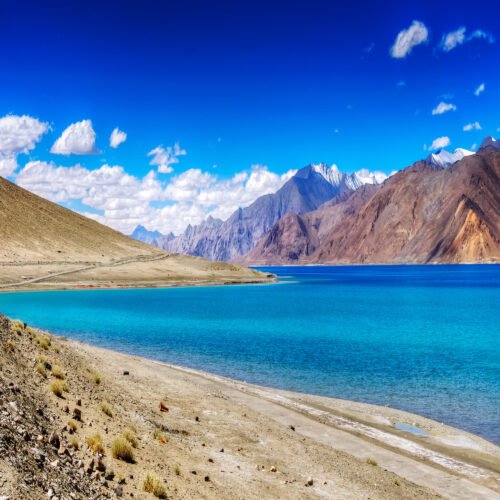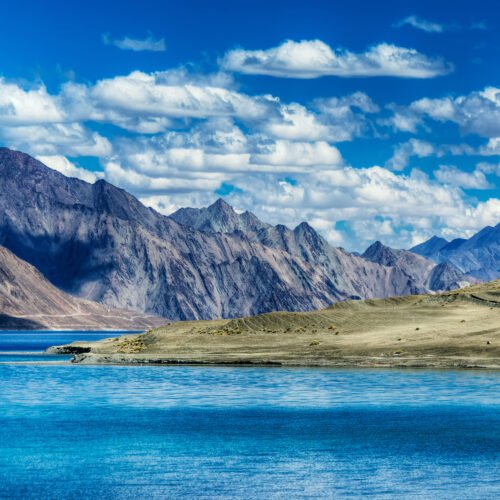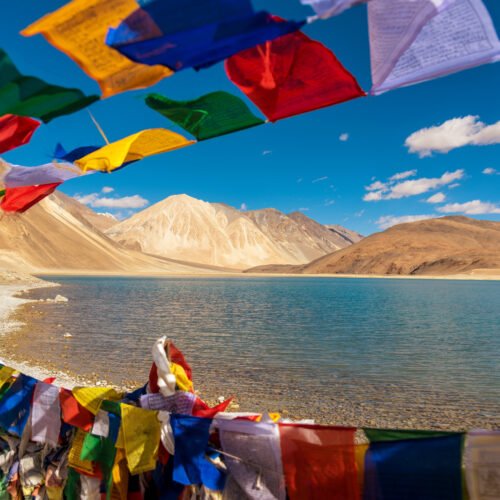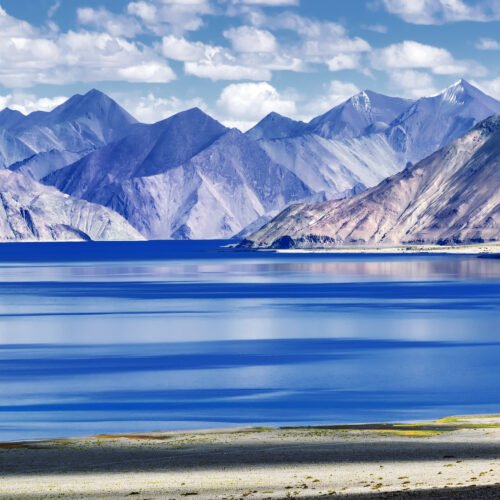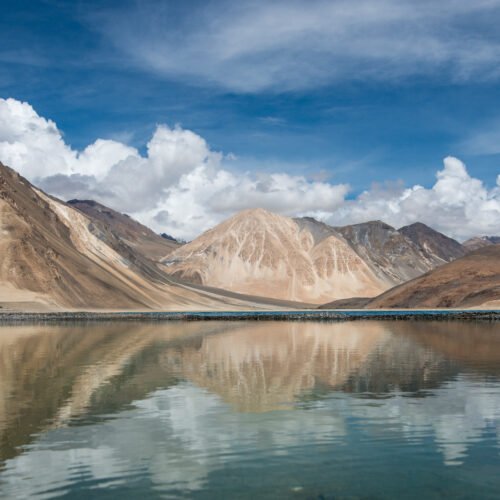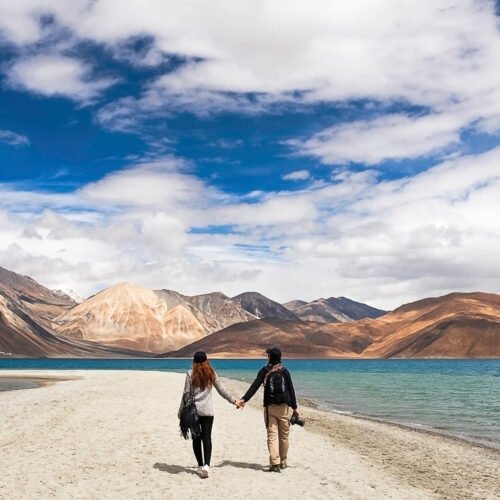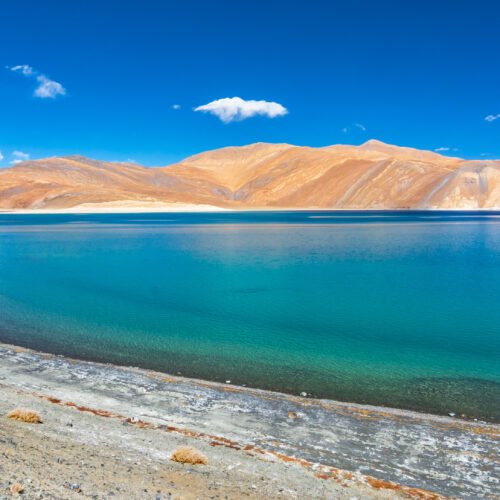
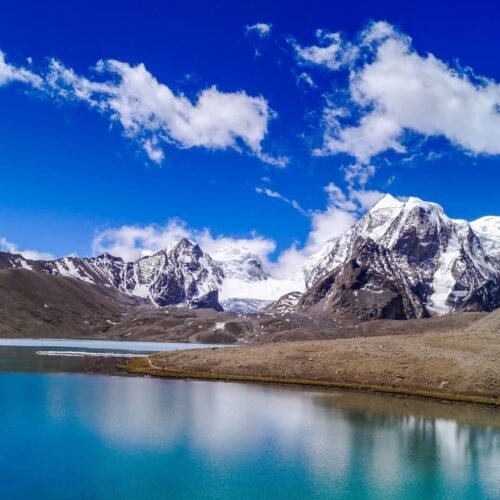
Pangong Tso, located at an altitude of 4,350 meters, is one of the most stunning natural wonders of Ladakh. The lake is about 134 km long, with one-third of it in India and two-thirds in Tibet (China). What makes Pangong extraordinary is its ever-changing shades of blue, which transform with the angle of sunlight and time of day, ranging from sapphire blue in the morning to turquoise in the afternoon and deep navy at dusk.
This high-altitude saltwater lake remains devoid of aquatic life, yet supports an ecosystem of migratory birds and nearby wildlife. For visitors, Pangong is not just a destination — it’s a once-in-a-lifetime experience that blends natural beauty, adventure, culture, and stargazing opportunities.
Why Visit Pangong Tso ?
Scenic Beauty – Witness a rare natural wonder where the waters constantly change color, framed by barren yet majestic mountains.
Camping Experience – Stay overnight in camps on the lakeshore, under one of the clearest night skies in India.
Photography Paradise – From sunrise to sunset, every angle is postcard-perfect — no wonder it’s a favorite spot for travel photographers.
Peace & Solitude – Unlike crowded tourist spots, Pangong offers uninterrupted silence and raw Himalayan landscapes.
Wildlife & Birdwatching – Spot migratory birds like bar-headed geese, Brahminy ducks, and rare black-necked cranes during summer.
Cultural Immersion – Visit nearby Ladakhi villages such as Spangmik, Merak, and Tangtse to experience local traditions and food.
Top Attractions in Pangong Tso
pangmik Village – The Tourist Hub of Pangong
Spangmik is the most popular village for visitors, located right on the banks of Pangong Tso. It offers a cluster of eco-friendly camps, wooden cottages, and homestays where travelers can spend the night. From here, you get uninterrupted panoramic views of the lake with the Himalayan peaks forming a majestic backdrop.
Highlights:
Sunrise and sunset photography spots.
Bonfire nights and stargazing.
Interaction with locals who share stories of life at high altitudes.
Merak Village – Quiet Retreat on Pangong’s Banks
Located further along the lake from Spangmik, Merak is perfect for those seeking peace and solitude away from the tourist rush. It is also one of the few villages where travelers can stay close to the China border region, making it adventurous yet serene.
Highlights:
Home to migratory birds during summer.
Scenic views of marshlands and grazing yaks.
Homestays offering authentic Ladakhi meals.
Man Village – The Last Settlement on Pangong
Man is among the last Indian villages on the Pangong stretch before the LAC (Line of Actual Control). It offers a glimpse of remote Ladakhi lifestyle, where locals depend on yak rearing and farming despite extreme weather.
Highlights:
Ideal for offbeat travelers.
Stunning photography opportunities of rustic stone houses with Pangong in the background.
Less commercialized compared to Spangmik.
Tangtse Village & Monastery
Tangtse is the gateway to Pangong Lake, located about 35 km before the lake. Historically, it was an important stop on the Silk Route, and today it’s the last reliable point for phone connectivity, small eateries, and basic facilities.
Highlights:
Ancient Tangtse Monastery with Buddhist murals and prayer flags.
Military memorials and stories from locals about the lake’s strategic importance.
A good place to acclimatize before heading to higher altitudes.
Birdwatching Zones Around Pangong
Despite its saline waters, Pangong is home to several migratory birds during summer. Birdwatching is especially rewarding near Merak and marshy patches of the lake.
Species to Spot:
Bar-headed geese – famous for flying over the Himalayas.
Brahminy ducks (ruddy shelducks) – often spotted in pairs.
Black-necked cranes – a rare species considered sacred in Tibetan culture.
Seagulls and sandpipers along the lakeshore.
Marmot Sighting on the Way to Pangong
En route to Pangong, near Changthang plains, you’ll find colonies of Himalayan marmots — large, friendly rodents that often pop out of burrows to greet travelers. They’ve become a fun photo stop along the journey.
Tip: Don’t feed marmots as it disrupts their natural diet.
Chang La Pass – The Gateway to Pangong
Although not directly on the lake, Chang La (5,360 m) is a highlight of the Pangong journey. Known as the third-highest motorable road in the world, it offers snow-clad landscapes almost year-round.
Highlights:
Snow walls in summer.
Hot tea served by the Indian Army at a tiny café.
Panoramic Himalayan views.
Frozen Pangong (Winter Attraction)
Between December and February, the entire lake freezes, turning into a vast sheet of ice. The frozen Pangong is a rare spectacle, attracting photographers and extreme adventurers.
Highlights:
Walk on the frozen lake (though with caution).
Ice formations and reflections of snow-covered peaks.
A surreal, otherworldly atmosphere with no tourist rush.
Photography Points & 3 Idiots Shooting Spot
Pangong shot to fame after the Bollywood movie 3 Idiots. A dedicated spot near Spangmik now displays the iconic yellow scooter and photo props for fans.
Highlights:
Popular selfie point for Bollywood lovers.
Wide-angled shots of color-changing lake waters.
Ideal for sunrise/sunset photography.
Things to Do in Pangong Tso
Camping: Spend the night in eco-tents or homestays. Waking up to the sunrise over the lake is unforgettable.
Stargazing: With minimal pollution and high altitude, Pangong’s skies are among the clearest in the world, perfect for astrophotography.
Photography: Capture time-lapse shots of the color-changing waters, reflections, and landscapes.
Birdwatching: Best in summer (May–September). Carry binoculars for rare species.
Village Walks: Explore Spangmik and Merak to understand Ladakhi lifestyle and enjoy homemade meals.
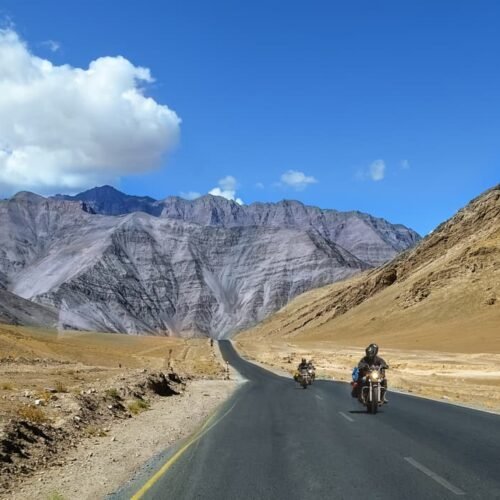
Adventure Road Trip: The drive to Pangong via Chang La or Shyok route is one of the most adventurous road trips in India, especially for bikers.
Best Time to Visit Pangong Tso
May to September (Summer):
Best weather conditions.
Camps and homestays are fully operational.
Roads from Leh to Pangong remain open.
Perfect for photography, camping, and birdwatching.
October to April (Winter):
Harsh weather, with temperatures dropping to -15°C to -25°C.
Lake freezes completely, offering a rare frozen-lake experience.
Limited accommodations available; most camps shut down.
Suitable only for experienced/adventurous travelers.
How to Reach Pangong Tso
From Leh (Most Popular Route):
Distance: 160 km (5–6 hours drive).
Route: Leh → Karu → Chang La Pass (5,360m, world’s third-highest motorable pass) → Durbuk → Tangtse → Pangong.
Scenic highlights include snow walls at Chang La, grazing yaks, and Himalayan landscapes.
Bring cash; no ATMs or digital payment facilities near Pangong.
Keep a basic medical kit and medicines for AMS (altitude sickness). Oxygen cylinders are advisable.
Stay hydrated and ascend gradually to avoid altitude sickness.
Mobile networks are unreliable. Only AIRTEL and BSNL postpaid works partially.
Do not swim in the lake — the water is extremely cold and unsafe.
Respect the environment: no plastic, no littering. Pangong is an eco-sensitive zone.
Book accommodation in advance during summer peak season.
Why Book With Gold Hill Luxe Tour and Travel?
At Gold Hill Luxe Tour and Travels, we provide:
Customizable and affordable Srinagar tour packages
Experienced local guides and drivers
Authentic Ladakh experiences, including permits Experts and equipment’s
Hassle-free bookings and 24/7 customer support
Pangong Tso, located at an altitude of 4,350 meters, is one of the most stunning natural wonders of Ladakh. The lake is about 134 km long, with one-third of it in India and two-thirds in Tibet (China). What makes Pangong extraordinary is its ever-changing shades of blue, which transform with the angle of sunlight and time of day, ranging from sapphire blue in the morning to turquoise in the afternoon and deep navy at dusk.
Embark on an extraordinary Himalayan adventure with the 8 Days Incredible Ladakh with Hunder Sand Dunes tour by Gold Hill Luxe Tour and Travel. Carefully...
Embark on an unforgettable journey through the breathtaking landscapes of the Indian Himalayas with the Leh Ladakh Expedition – 6 Days / 5 Nights by...